


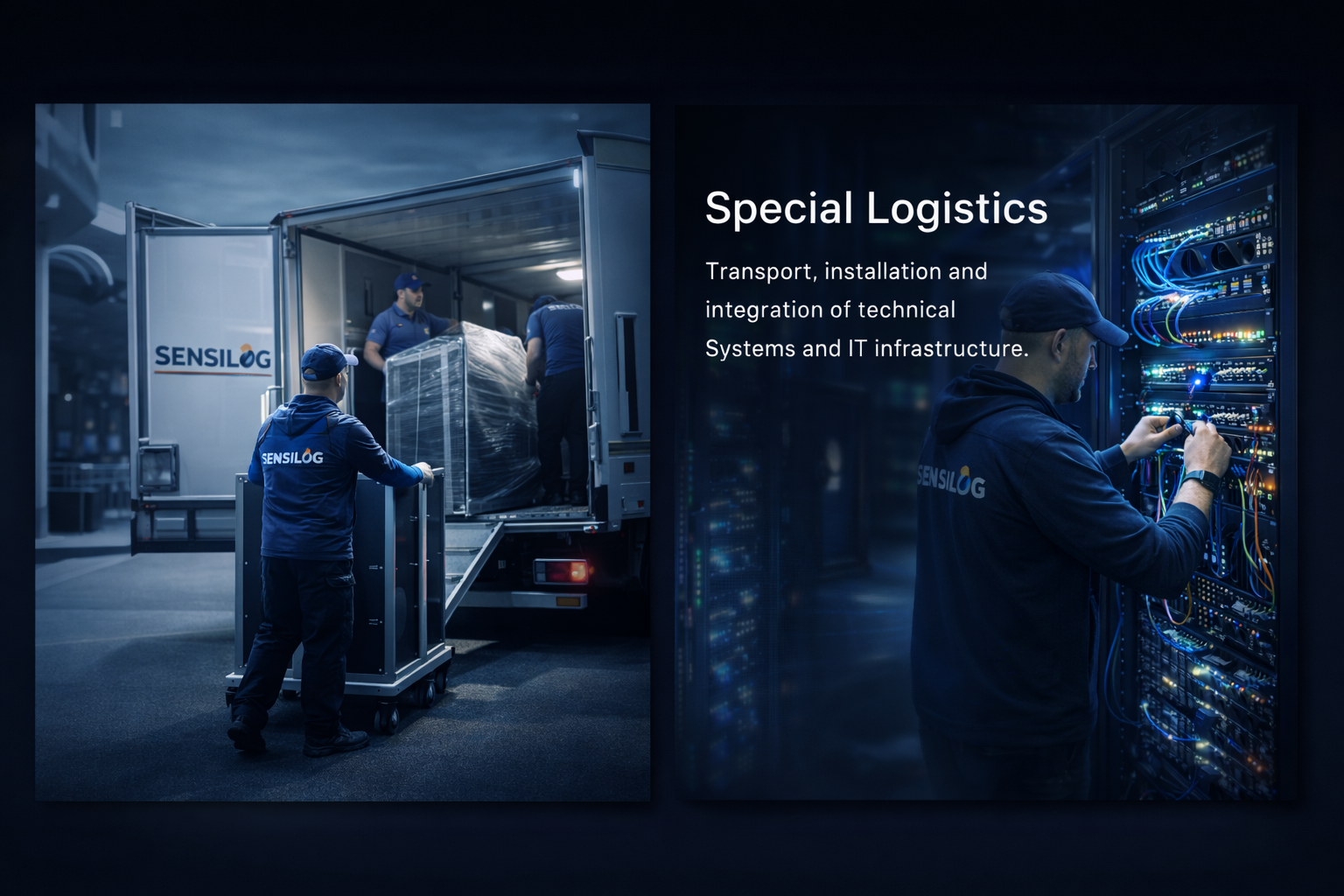
High-tech logistics combines transport with technical execution, supporting equipment that requires controlled handling, precise positioning and full system integration. This includes servers, IT infrastructure and complex technical systems where stability, security and accuracy are essential.
Transport operations are planned with attention to factors such as vibration, movement, temperature exposure and environmental conditions, ensuring that sensitive systems remain protected throughout the entire process. Each shipment is adapted to the technical requirements of the equipment, using appropriate packaging, securing systems and transport configurations.
Handling procedures are defined in advance, ensuring that each component is moved safely and without unnecessary stress on sensitive parts. This is especially important for IT systems, server racks and electronic equipment that require stable conditions during transport.
Transport, installation and integration of technical systems and IT infrastructure
Installation is performed as a structured technical process, where equipment is positioned, connected and configured according to operational and technical specifications. Each step is executed with precision to ensure compatibility, performance and long-term reliability.
Electrical connections, cabling integration and system setup are carried out in accordance with technical standards, ensuring that all components function correctly within the existing infrastructure. Mechanical positioning and alignment are also performed to guarantee stability and correct system operation.
Testing and verification are essential parts of the process, ensuring that systems are fully functional and ready for use before handover. Functional checks, performance validation and operational testing are conducted to confirm that all parameters are met.
Integration into operational environments is carried out in coordination with on-site teams, ensuring alignment with technical parameters, system architecture and infrastructure requirements. This ensures that newly installed systems operate seamlessly within existing environments.
Each project follows a clearly defined workflow, beginning with technical assessment and site preparation, followed by transport, installation, configuration and final testing. This structured approach ensures consistency, reduces risk and improves efficiency.
The objective is to minimize downtime and ensure that systems are operational as quickly as possible. By combining logistics and technical execution into a single process, delays are reduced and overall project efficiency is improved.
Continuous control and monitoring throughout the process ensure that all activities are performed according to defined standards. This results in predictable outcomes, reduced operational risk and high-quality execution.